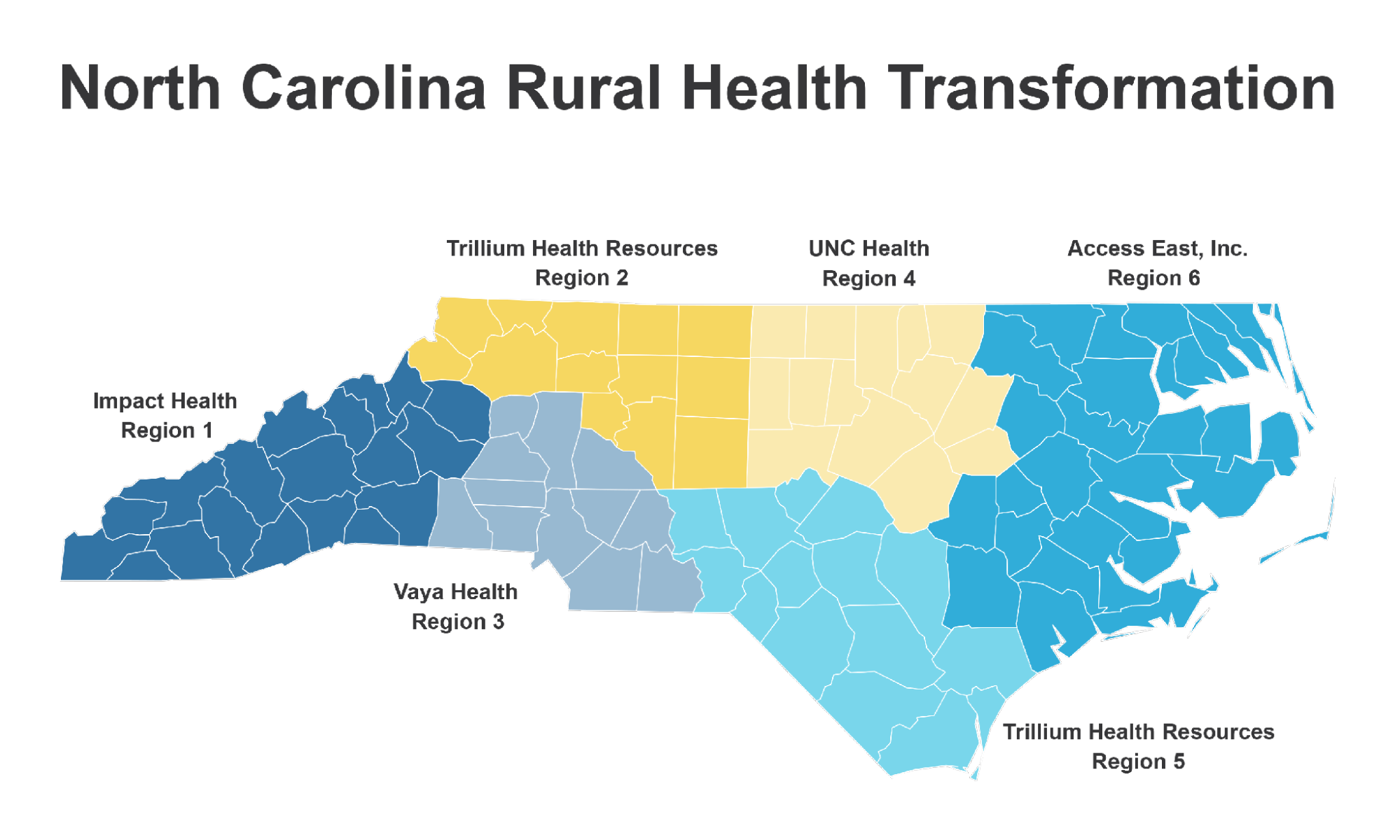
At the end of 2025, the Centers for Medicare and Medicaid Services (CMS) awarded North Carolina over $213 million to improve rural health. This is the first of up to five years of investment under the Rural Health Transformation Program (RHTP). With more than 3 million rural residents, North Carolina has the second-largest rural population in the nation.
The North Carolina Department of Health and Human Services (NCDHHS) is leading this work, which focuses on six key strategies:
Developing locally governed care networks
Expanding access to primary care, with an emphasis on maternal health chronic disease prevention and management food is medicine
Increasing access to behavioral health and substance use services
Building a robust and resilient healthcare workforce
Ensuring rural health systems are sustainable
Leveraging digital solutions to improve access to care
In North Carolina, RHTP is implemented by NC ROOTS (Rural Organizations Orchestrating Transformation for Sustainability) Hubs. These regional networks bring together medical, behavioral health, and social service providers and systems to improve community health.
NC ROOTS Hubs are governed by local community partners who are committed to expanding access to care, addressing health-related needs, and strengthening the long-term capacity of rural health systems. This approach encourages collaboration, coordination, and local solutions that fit each region’s needs.
Over the next five years, NC ROOTS Hubs will support their communities by:
Enhancing care coordination across regions
Leveraging digital tools to improve health outcomes
Expanding access to primary care
Strengthening healthcare through workforce development
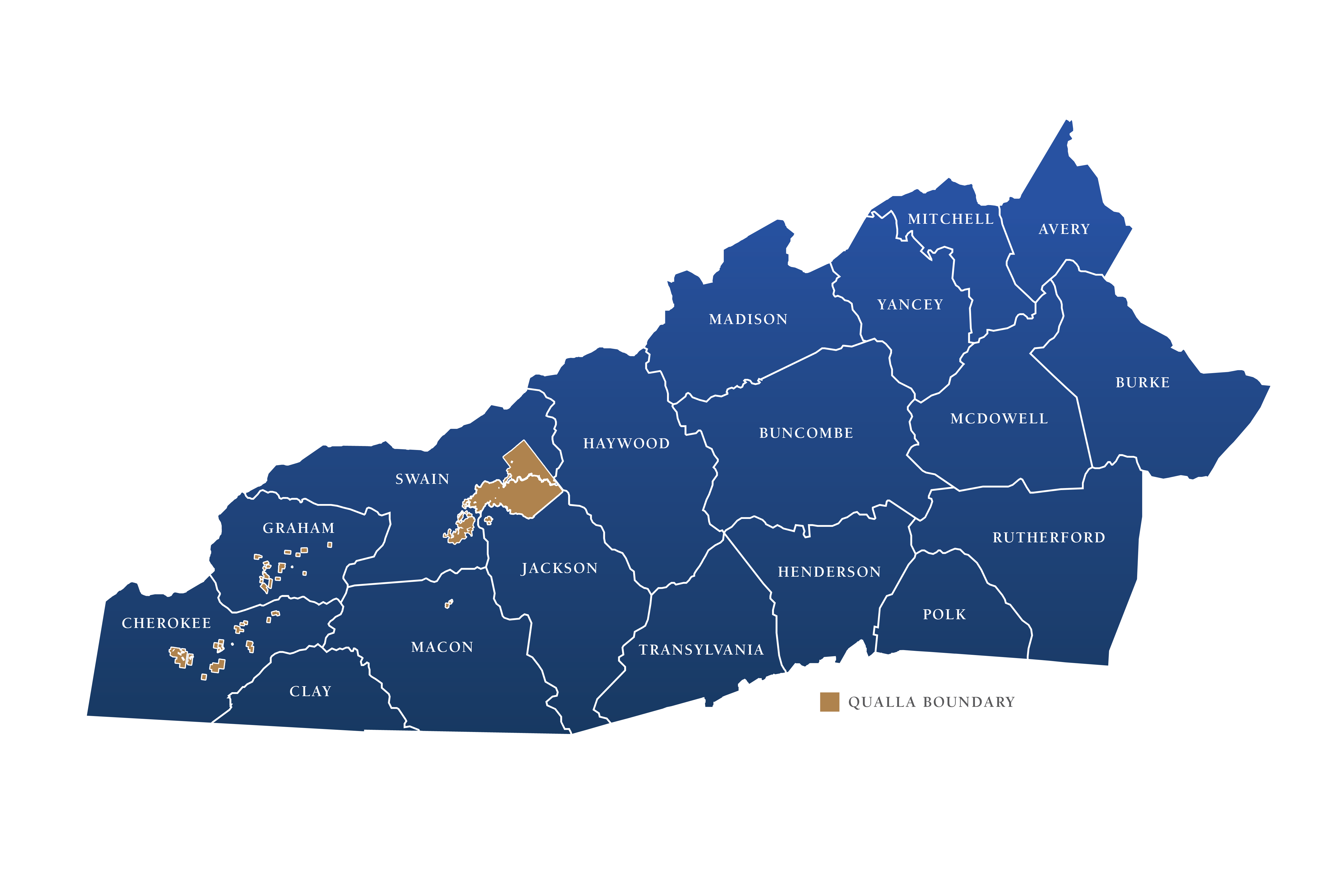
Our region includes North Carolina’s 19 westernmost counties and the Qualla Boundary. As Western North Carolina’s NC ROOTS Hub Lead, we will leverage our experience, partnerships, and resources to
Strengthen rural health initiatives and partners working to prevent and manage chronic disease.
Expand access to whole-person health from workforce pipeline to point of care.
Sustain rural health innovations through financial and digital solutions.
We are focused on our region’s tremendous strengths and assets. We are confident that WNC will be a model for rural health transformation nationwide.
NC ROOTS Hub Region 1 Early Work
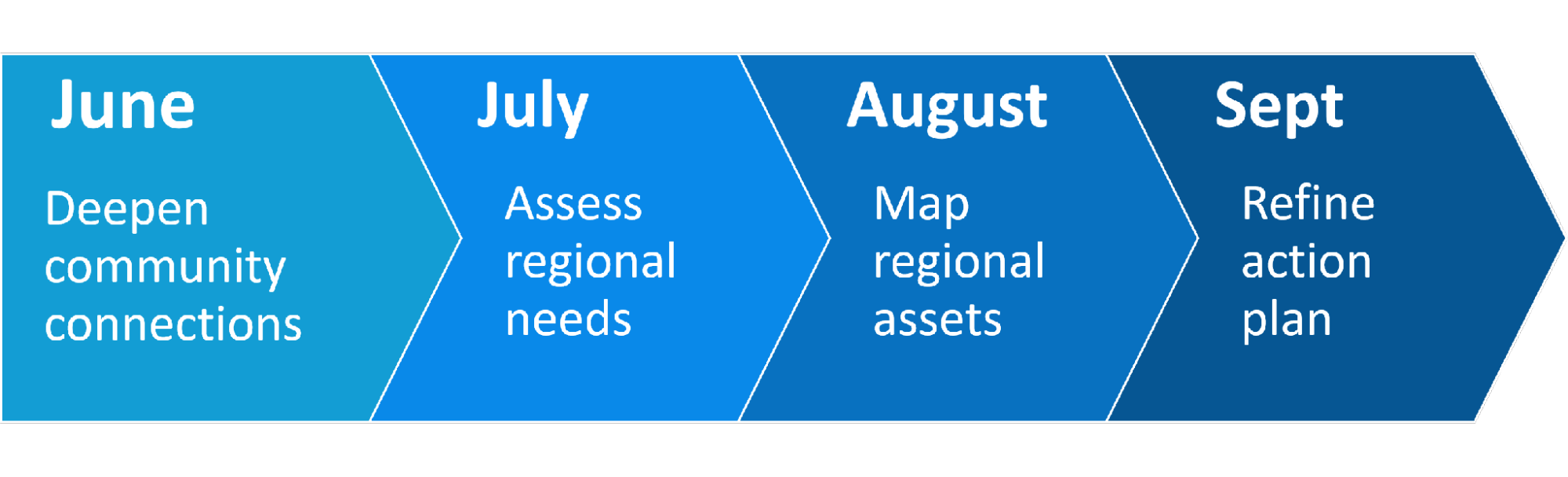
Impact Health is committed to ensuring our NC ROOTS Hub Action Plan is informed by community experiences and insights. Over the next several months, we will spend time in our rural communities listening, learning, and understanding our region’s health needs, working alongside those who are closest to them.
Get Involved
We would love to partner with you to improve rural health in WNC. Please fill out the form below to let us know how you’d like to engage with our region’s NC ROOTS Hub work. You can also sign up for our newsletter to stay informed on NCRHTP progress and funding opportunities.
The North Carolina Department of Health and Human Services manages the delivery of health- and human-related services for all North Carolinians, especially our most vulnerable people – children, elderly, disabled and low-income families. NCDHHS serves as the lead state agency for North Carolina’s Rural Health Transformation Program aimed at improving health care for rural North Carolinians and their communities.
Stevens Amendment Disclosure: This webpage is supported by the Centers for Medicare & Medicaid Services (CMS) of the U.S. Department of Health and Human Services (HHS) as part of a financial assistance award totaling $213,008,356.47 with 100 percent funded by CMS/HHS. The contents are those of the author(s) and do not necessarily represent the official views of, nor an endorsement, by CMS/HHS, or the U.S. Government.